24 October 2026 · Design Details · Everyday Living · Joinery · Considered Interiors
The Details We Touch Every Day
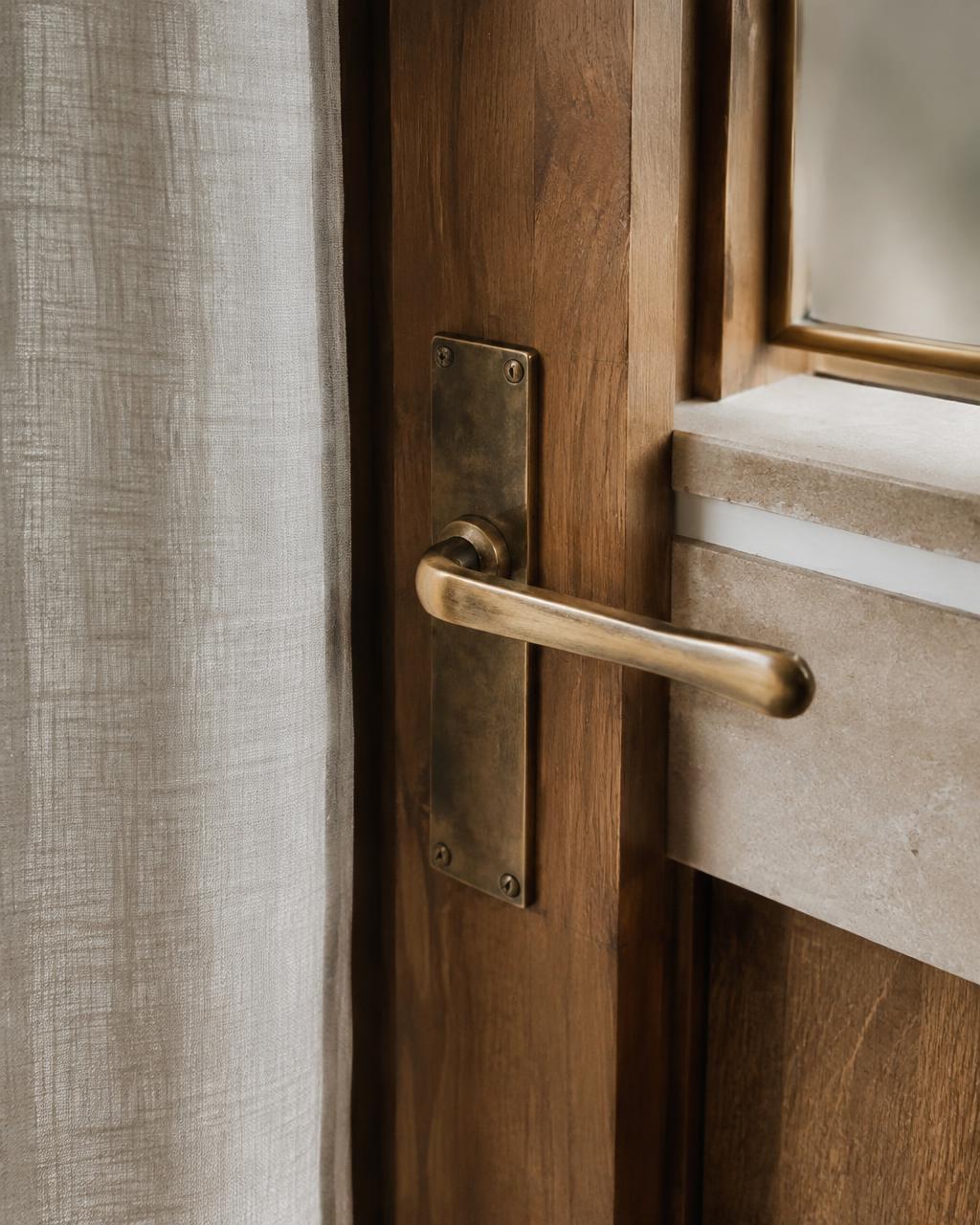
A room can be beautifully composed and still feel awkward to use. A cupboard asks for two hands when only one is free. A door handle sits too close to its frame. A light switch is easy to find on arrival, but inconvenient once you have settled into a chair. These are small interruptions, yet they shape the experience of a home every day.
At Babette Bowen Design, our building-first approach extends to these points of contact. The architecture establishes the room; the details determine how comfortably we inhabit it. Looking closely at what a hand reaches for, and what happens next, is an essential part of making an interior feel resolved.
Begin with the action
It is tempting to choose ironmongery as a finishing touch: a metal, a silhouette, something that sits well against a painted door. But a handle is first an instrument. It must turn, pull or lift with an effort appropriate to the object it operates.
A heavy door and a shallow drawer do not ask the same thing of the hand. Neither should their fittings be chosen by appearance alone. The space behind a pull, the resistance of a latch and the clearance beside an adjoining surface all matter. A detail that looks elegant in elevation can prove uncomfortable in use.
The useful starting point is a simple question: what does someone need to do here? From that follows the shape, position and mechanism. Appearance remains important, but it becomes part of a fuller judgement.
Quiet should not mean hidden
There is a particular tension in restrained interiors between visual simplicity and practical clarity. Removing handles may make a bank of joinery appear calmer, but it does not automatically make it better. A concealed grip needs enough room for fingers. A push-release mechanism needs to suit the weight, size and frequency of use of the door.
The same is true of controls. A wall with very few visible switches may look composed, yet a home should not require a sequence of instructions to operate. The essential actions ought to be understandable to someone encountering the room for the first time.
Restraint is most successful when it removes unnecessary decisions rather than useful information. Sometimes a clearly expressed handle or a straightforward switch is the quieter choice, because it allows the person using it to move on without thought.
Consider more than one pair of hands
Homes are used by people with different heights, strengths and degrees of dexterity. Those needs also change. Carrying a child, recovering from an injury or simply arriving with bags can reveal difficulties that were not apparent when a fitting was tested in isolation.
Lever handles can be easier to operate than small knobs. A well-positioned pull may be more forgiving than a narrow recessed groove. Neither solution belongs to a particular visual style; both can be integrated into a carefully drawn interior.
Where possible, these choices benefit from being tried rather than merely viewed. Hold a sample. Test the mechanism. Check the reach with the actual furniture arrangement in mind. Drawings are indispensable, but a hand can tell us something a drawing cannot.
Draw the meeting points
Touch also brings attention to the places where materials meet. The underside of a table edge, the end of a handrail and the return of a joinery pull may sit outside the main view, but they are not outside the experience of the room.
An edge should be considered for its purpose. A slight easing can make a frequently handled surface more comfortable without changing its architectural character. A junction should avoid catching clothing or leaving an awkward recess that is difficult to clean. These are not decorative refinements. They belong within the design itself.
This is one reason bespoke joinery requires attention beyond its front elevation. Its success depends on depth, movement, tolerances and the relationship between the visible surface and the working parts behind it.
Comfort without ceremony
The best everyday details rarely announce themselves. A door opens comfortably. A drawer closes without being coaxed. The control you need is where your hand expects it to be.
None of this requires every fitting to match, or every mechanism to disappear. It requires a consistent level of care. When the points of contact are considered alongside the architecture, rather than after it, the home becomes easier to live in. Its beauty is supported by something less immediately visible, but just as lasting: the feeling that ordinary actions have been properly thought through.
Bathroom design, down to the touchpoints
Our bathroom design service in Cardiff, Penarth and the Vale of Glamorgan considers the details you use every day alongside the layout. The reach to a tap, the position of a towel rail and storage beside the basin all deserve attention before fittings are selected. A considered ensuite or bathroom brings these decisions together with materials, lighting and practical maintenance; beautiful finishes work best when the room is comfortable to use.