28 October 2026 · Considered living · Playful interiors · The Muse · Bespoke design
A Considered Home Can Still Be Playful
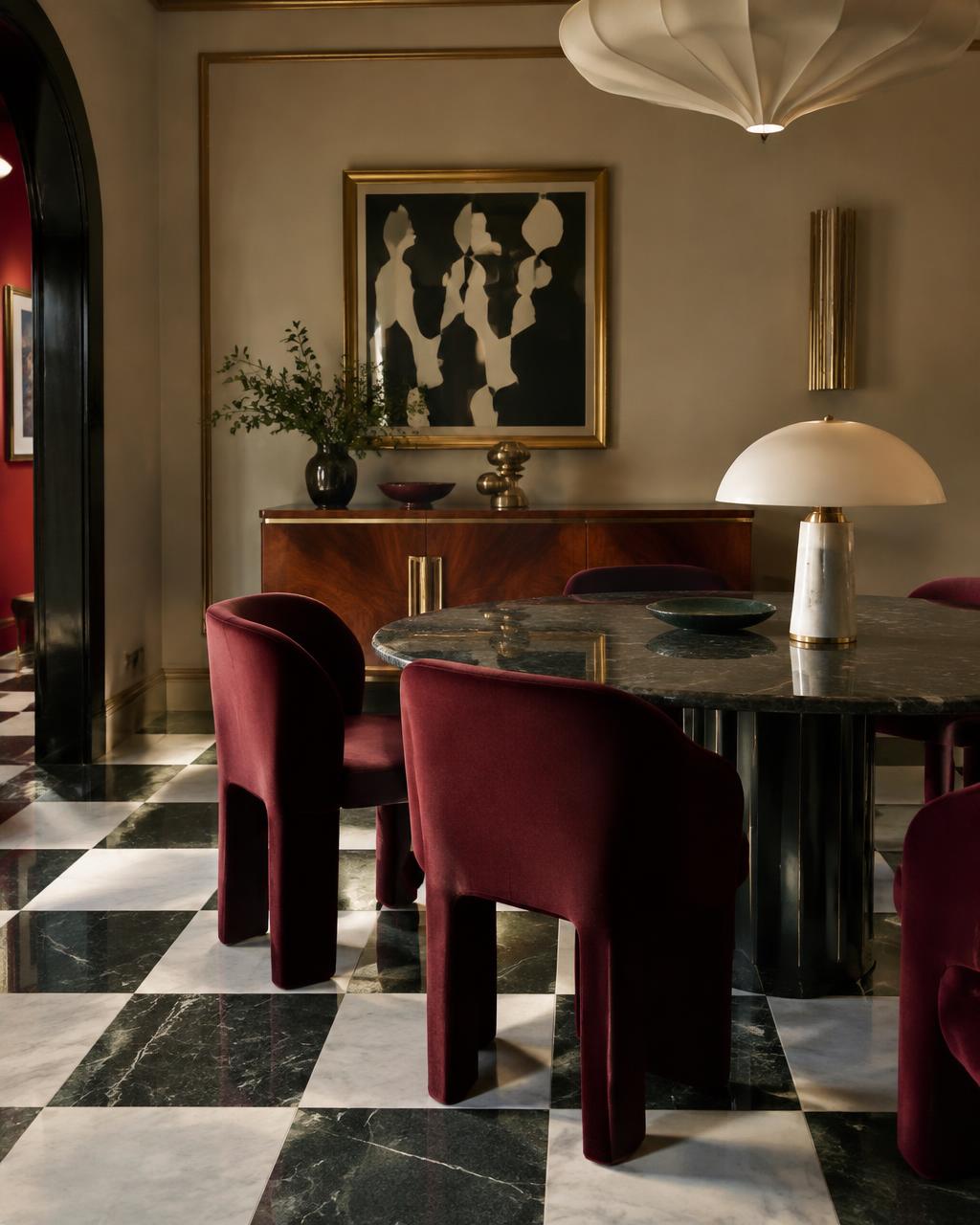
There is a particular kind of room that looks resolved but leaves you unsure where to sit. Everything belongs to the composition; it is less clear whether anyone belongs in it. This is not necessarily a question of minimalism or formality. A richly furnished room can feel just as forbidding as an almost empty one.
A home needs something beyond visual coherence. It needs permission to be enjoyed. Within a considered interior, a little play can make the difference between a room we admire and one we feel part of. The question is how to introduce it without losing the architectural clarity that allows a home to feel settled.
Considered need not mean solemn
A building-first approach begins with the architecture, but it does not end there. The plan, openings and proportions establish the conditions for living. They are not instructions for how seriously that living must be conducted.
Once those foundations are understood, there is room for surprise: an unexpected curve within an otherwise rectilinear plan, a lively pattern in a small room, or a familiar piece of furniture given an unfamiliar purpose. Such choices can bring warmth and individuality without asking the entire interior to compete for attention.
Restraint is useful here, not as a rule against expression, but as a way of giving it space. One spirited decision can have greater presence when the surrounding room is composed. Equally, an exuberant interior can feel coherent when its underlying organisation is clear.
Start with enjoyment, not an effect
The most convincing playful elements usually begin with something people actually do. They are not added simply to make a photograph more memorable.
At The Muse in Oak Mews, a bespoke DJ booth disappears into the kitchen island. It is a practical expression of the home's character: designed for living, with room for play. Soft curves and considered layers create a natural sense of flow, while the booth gives an everyday part of the home another possibility.
The interest lies in that relationship. The kitchen island remains part of the domestic architecture, but it also accommodates an activity that might otherwise require a separate, conspicuous piece of equipment. The design makes enjoyment available without allowing it to dictate the room at every hour.
This is a useful starting point for any home. Rather than asking what unusual feature a room might contain, ask what would make spending time there more enjoyable. The answer may be modest, and it may have little to do with decoration.
Give surprise a place
Not every space needs the same degree of expression. A home can sustain different moods without becoming a collection of unrelated ideas.
A powder room, for example, offers a contained opportunity to be more adventurous. Its brief visits and defined boundaries allow a pattern to feel immersive rather than insistent. The bold wallpaper in The Muse powder room takes advantage of that possibility. It gives a small space its own character without requiring the rest of the home to follow suit.
Containment is not the same as concealment. It is about understanding where a gesture will be most effective, and how often it will be encountered. Something delightful in passing may feel demanding when it occupies the principal view from a favourite chair.
That distinction helps separate a lasting pleasure from an idea that quickly becomes tiring.
Resolve the practical parts
Playfulness benefits from precision. An unconventional feature still needs to work comfortably, be easy to use and sit convincingly within its setting. Indeed, the more unexpected the idea, the more carefully its practical requirements deserve to be resolved.
For an integrated music setup, that means considering equipment dimensions, access, ventilation and cable routes alongside the appearance of the joinery. These are general design questions rather than decorative afterthoughts. Addressing them early allows the finished element to feel natural rather than improvised.
The same principle applies to a movable table or a generous window seat. If enjoyment requires constant rearranging or awkward compromises, the invitation is unlikely to last.
Leave room for ease
Timelessness need not mean removing everything particular or surprising. A home can be enduring because its architecture is coherent and its choices are closely connected to the people who live there.
At Babette Bowen Design, we see no contradiction between a quietly architectural interior and a sense of humour, pleasure or occasion. Careful design can support all three. The aim is not to make a home less composed, but to ensure that its composure never gets in the way of living.