4 November 2026 · Bathroom design · Space planning · Material honesty
A Bathroom Considered as a Room
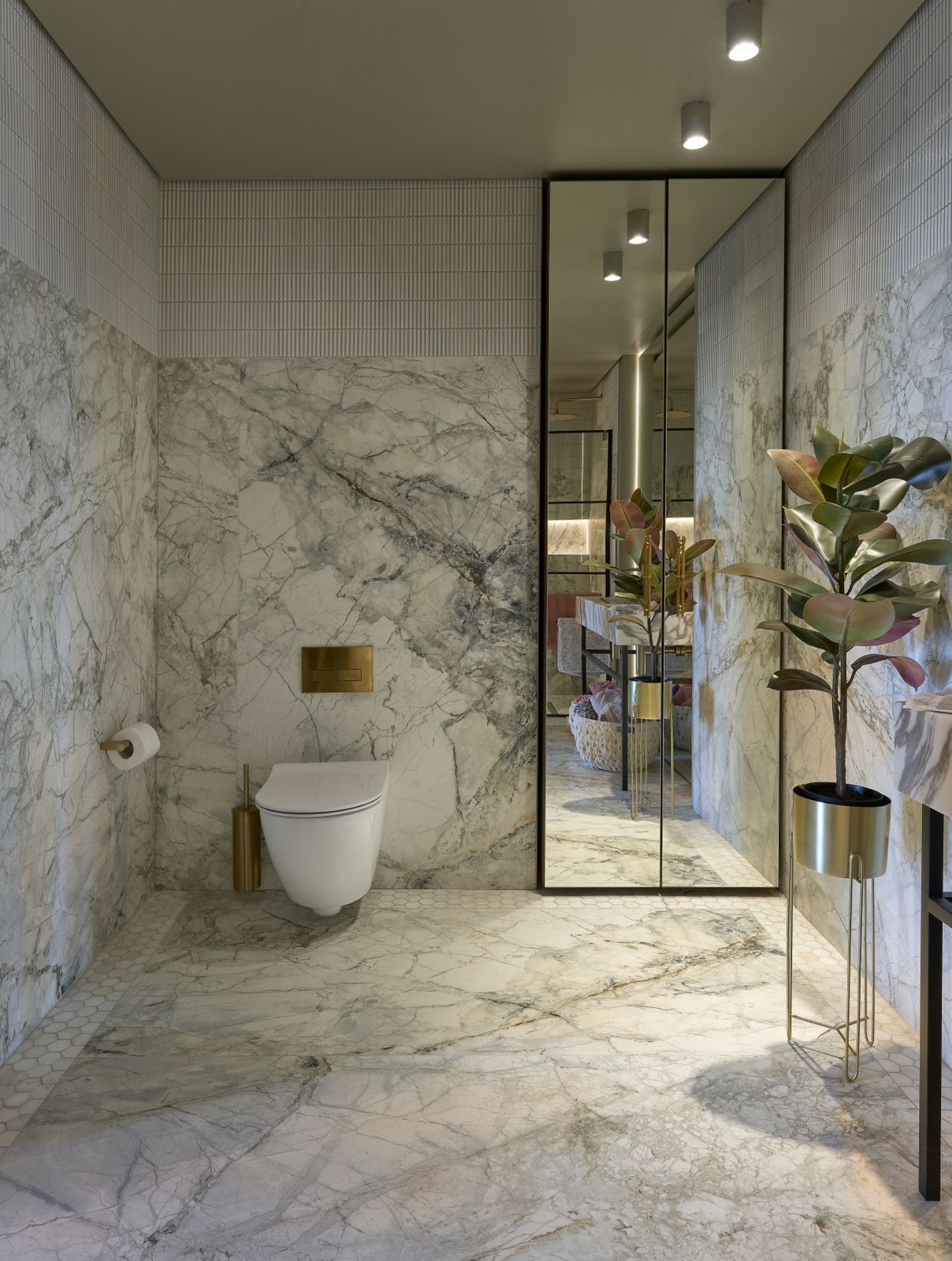
More than a collection of fittings
Bathrooms are often assembled in the imagination before they are designed: a bath, a basin, a particular stone, perhaps a photograph saved for its atmosphere. Each choice may be beautiful in isolation. Yet the room only becomes convincing when those elements have a clear relationship to one another, and to the building around them.
At Babette Bowen Design, a building-first approach means beginning before the finishes. Where is the window? What does the doorway reveal? How much uninterrupted wall is available, and where can services reasonably run? These questions are less immediately seductive than a slab of marble, but they establish whether the finished bathroom will feel comfortable or compromised.
The aim is not to make a bathroom resemble a sitting room. It is to give it the same architectural consideration.
Begin with an ordinary morning
A useful starting point is to imagine the room in use, without editing out the ordinary details. Someone reaches for a towel with wet hands. Two people need the basin at similar times. A shower is running while a drawer stands open. There are toothbrushes, bottles, laundry and cleaning products to accommodate.
Planning around these realities is not separate from creating a beautiful room. It is how that beauty survives everyday life. A generous basin area may be more valuable than a second basin squeezed into an inadequate length of joinery. A well-positioned shelf may make a shower more comfortable than an additional fitting.
Equally, a bath should earn its place. Where bathing is an important part of daily life, it deserves space and an intentional position. Where it is rarely used, allowing it to dominate the plan can diminish everything else. There is no universal arrangement worth imposing on every household.
Give the eye somewhere to rest
Bathrooms bring together an unusually dense collection of objects. Taps, wastes, controls, screens, rails and mirrors can quickly create a fragmented composition, even within a restrained palette.
Order comes from deciding what should lead and what should recede. A basin might sit within a single, coherent wall composition rather than compete with several unrelated features. Tile joints can be considered alongside the edges of mirrors and joinery. A shower screen can be positioned with regard to the room’s sightlines, not simply the boundary of its wet area.
This does not require rigid symmetry. An asymmetrical arrangement can feel entirely settled when its relationships are deliberate. What matters is that the room has a legible structure, with enough clear surface to balance its necessary equipment.
Let performance inform the palette
Material choices in a bathroom carry responsibilities beyond appearance. Water, humidity, cleaning and bare feet all affect what is suitable, and where. A finish that works beautifully on a wall may be inappropriate underfoot; a stone admired for its variation may demand more care than its owner wants to give.
These are conversations to have early, with samples and technical guidance rather than assumptions. Slip resistance, compatibility with the proposed substrate, sealing requirements and maintenance should be understood before a specification is settled.
Material honesty also means accepting the character of the chosen surface. Natural stone is not uniform. Timber needs careful detailing and appropriate positioning. Grout forms part of a tiled surface rather than disappearing from it. A convincing palette acknowledges these qualities instead of relying on an image of permanent perfection.
Make room for maintenance
Some of the most important bathroom decisions will rarely be noticed once the work is complete. Waterproofing, drainage, ventilation and access to concealed components need to be coordinated with the relevant specialists from the outset.
A concealed fitting is only an improvement if it remains serviceable. A tightly detailed junction is only successful if its construction can perform in a wet environment. Architectural clarity should not depend on making routine maintenance unnecessarily difficult.
Cleaning deserves the same consideration. Awkward gaps, inaccessible corners and elaborate changes of level can introduce work without adding much to the experience of the room. Simpler arrangements often offer a more enduring kind of ease.
A room that feels resolved
The most satisfying bathroom is not necessarily the largest or the most lavishly finished. It is the one in which space, fittings and daily habits have been considered together.
Its character may be expressive or quiet, richly textured or spare. Beneath those differences, the ambition remains the same: a room that supports an ordinary morning with care, and feels complete without needing anything more.